
How to Pack Fragile Items So They Survive
Plates go on edge, not flat — and eleven other things that decide whether your china arrives intact. Wrapping, cushioning and the shake test.
Free referral service · Services are provided by independent third-party providers
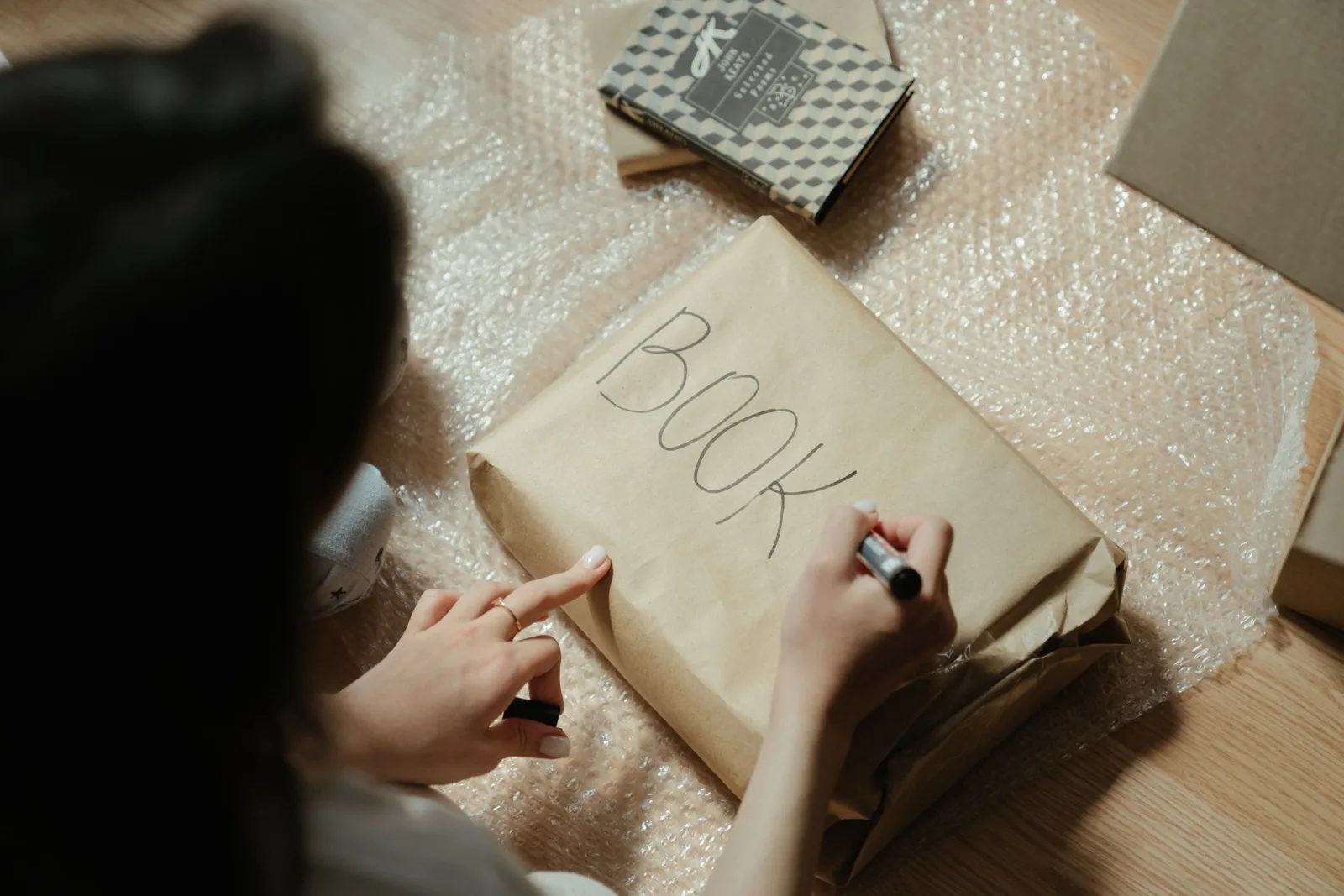
Fragile items almost never break from being dropped. They break because the box was not full. Contents shift a few millimetres on every corner, and over twenty miles that is thousands of small collisions. Fill every void, wrap in unprinted paper, use double-walled dish packs with cell dividers, plates on edge, and apply the tilt test before you seal. This guide sets out the method good professional packers use, written out in full.
The physics, briefly
A sealed carton in a truck is a container of objects experiencing constant low-grade acceleration — every brake, every turn, every expansion joint on the 101. If the contents cannot move, none of that energy transfers into them. If they can move even slightly, each of those events becomes an impact between two hard objects.
That is the whole theory, and it explains why the damage pattern looks the way it does.
Genuine drops account for almost nothing. The failure people imagine is the rarest one. The failure that actually happens is invisible, happens slowly, and was decided at the moment somebody taped a box that still had space in it.
Materials — and why each one exists
| Material | What it does | Substitute? |
|---|---|---|
| Dish pack (5.2 cu ft, double wall) | Resists crushing from stacking. A single-wall box does not. | No. This is the one item with no acceptable substitute. |
| Cell dividers | Stops item-to-item contact even if the box shifts. | Cardboard offcuts at a push, but poorly. |
| Unprinted packing paper | Wraps without transferring ink to glaze, gilt or unglazed ceramic. | Plain newsprint end-rolls. Never printed newspaper against an item. |
| Bubble wrap | Cushions irregular shapes and protrusions. | Paper, doubled — adequate for most things. |
| Foam pouches | Fast protection for stemware. | Paper, wrapped properly. |
| Corner protectors | Frames and glass tops fail at corners first. | Folded cardboard, taped. |
| Mirror carton | Adjustable flat box so art and glass travel on edge. | No good substitute for anything large. |
| Tape — the real thing | Holds a loaded 40 lb box closed under vibration. | Not masking tape. Not duct tape. |
On newspaper. It is excellent as void fill and wrong as a wrap. Ink transfers onto glaze, gilt, unglazed ceramic and painted surfaces, and on older china it does not always come off. Use unprinted paper against the item and whatever you like filling the gaps.
The universal method — five steps for anything breakable
Method
The sequence that applies to every fragile item
Step five is the one people skip and the one that prevents about half of all breakage. It takes four seconds.
The tilt test is the whole discipline. Close the flaps without taping, lift the box a few inches, tilt it side to side, and listen. If you hear anything move, open it and add fill. A properly packed dish pack is silent and feels solid, like a single object rather than a container of objects.
Item by item
| Item | Method |
|---|---|
| Plates & bowls | Wrap individually, then stack on edge, vertically, like records in a rack. Flat-stacked plates transmit the full weight of the stack into the lowest one. On edge, the force runs through the strongest axis. This single change prevents more breakage than any other. |
| Stemware | Wrap the bowl first, then the stem, then the whole piece. Upright in a divided cell — never lying down, where the stem takes a bending load it was never designed for. Paper inside the bowl for anything delicate. |
| Mugs & teacups | Paper inside first, then wrap, handles protected separately. Upright, in cells, in the upper layer of the box. |
| Figurines & collections | Individually wrapped, protruding parts padded separately, boxed by shelf and numbered. Unpacking then reverses the shelf rather than becoming a puzzle. |
| Vases | Paper inside the neck to support it, wrapped outside, upright, well filled around. Tall narrow items fail at the neck. |
| Framed art & mirrors | Tape a large X across the glass so a break holds together rather than travelling. Corner protectors, wrap, mirror carton sized to the frame. Always on edge, never flat, never stacked on. |
| Lamps | Base and shade separated, always. Bulb and harp removed. Shades nest in their own carton with paper between and nothing on top — a shade will not survive weight. |
| Glass & stone tops | Edge protection all round, vertical, in a mirror carton or crate. Over about 36 inches the flex across the middle is the failure point — that is a crating case, not a carton case. |
| Vinyl records | Vertical, snug, in small boxes. Never flat-stacked, never left in heat — they warp faster than people believe. |
| Flat-screen TVs | Original box if you kept it. Otherwise a lay-flat carton, screen protected, vertical, nothing on top ever. |
| Marble & stone objects | Heavy and brittle at once. Small boxes, heavily padded, and never sharing with anything else. |
| Anything already repaired | The old repair is the weak point and transit will find it. Pad it as though it is already broken. |
Loading and labelling — where good packing gets undone
Packers pack; movers drive. But a perfectly packed dish pack can still be ruined in the truck, so brief whoever is loading on these three points.
- Fragile cartons travel high and light. Nothing stacked on top. This is the whole instruction and it is the one most often ignored.
- Mirror cartons and art travel on edge, vertically, secured against a wall of the truck — never laid flat where anything can be placed on them.
- Do not let a loaded truck sit overnight in a Phoenix summer. Unventilated box trucks hold heat long after sunset. See the summer heat protocol.
Label on the sides, not the top. A box stacked in a truck shows you its side, not its lid. Mark the room, the contents, FRAGILE, and THIS WAY UP with an arrow. Marking all four sides takes ten seconds and survives however the load ends up arranged.
The Phoenix problem: heat-fragile is not impact-fragile
Local, and missing from every national guide. Several categories that need no special packing at all still need special handling here, because their enemy is temperature rather than shock.
Candles deform and fuse to their wrapping. Vinyl warps. Photographs and slides stick together permanently. Electronics degrade at the capacitor. Medication loses potency silently. Wax-sealed preserves leak into everything around them. None of that is solved by a better box.
The rule is the same one that governs the rest of a summer move: if it would not be fine in a parked car, it does not go in the truck. Those categories get packed last, loaded last, and travel in a conditioned vehicle.
If something breaks anyway
Photograph it before you move it, keep the carton and the packing material, and note which box it came from. If a professional packed it, tell them before you clear anything away — the state of the carton is the evidence for what happened, and a company acting in good faith will want to see it.
Ask any provider before booking how breakage is handled and what coverage they carry.
Packing fragile items — questions
What is the most common reason fragile items break?
The box was not full. A lot of transit damage traces back to voids. If a sealed carton makes any sound when tilted, it is not finished.
Should plates be packed flat or on edge?
On edge, vertically, always. Flat-stacked plates put the full weight of the stack through the lowest one.
Can I use newspaper?
As void fill, yes. As a wrap against glaze, gilt or unglazed ceramic, no — the ink transfers and does not always come off older china.
Do I really need dish packs?
For china and glass, yes. Double-walled construction plus cell dividers is a different product from a standard carton, not a premium version of one.
How do I pack a china cabinet?
Shelf by shelf, numbered, so unpacking reverses the order. Plates on edge, stemware upright in cells, figurines individually wrapped and boxed with their shelf.
How much does it cost to have fragiles packed professionally?
Typically $240–$680 for two packers over two to four hours, dish packs and dividers included. See fragile and specialty packing.
Will you check boxes I packed myself?
Many providers will, if you ask — and it is common to find at least one box that needs more fill.
Compare quotes from local packing providers
Tell us about your move — it takes about two minutes. Free to request, no obligation.